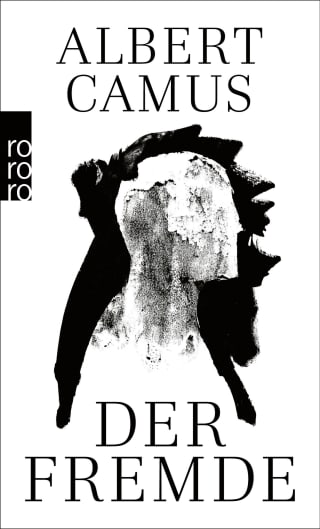
«Mir wurde klar, dass ich das Gleichgewicht des Tages zerstört hatte, die außergewöhnliche Stille eines Strandes, an dem ich glücklich gewesen war. Da habe ich noch viermal auf einen leblosen Körper geschossen, in den die Kugeln eindrangen, ohne dass man es ihm ansah. Und es war wie vier kurze Schläge, mit denen ich an das Tor des Unglücks hämmerte.»
Die Geschichte eines jungen Franzosen in Algerien, den ein lächerlicher Zufall zum Mörder macht, wurde 1942 im besetzten Frankreich zu einer literarischen Sensation. Der Roman bedeutete den schriftstellerischen Durchbruch für …
«Mir wurde klar, dass ich das Gleichgewicht des Tages zerstört hatte, die außergewöhnliche Stille eines Strandes, an dem ich glücklich gewesen war. Da habe ich noch viermal auf einen leblosen Körper geschossen, in den die Kugeln eindrangen, ohne dass man es ihm ansah. Und es war wie vier kurze Schläge, mit denen ich an das Tor des Unglücks hämmerte.»
Die Geschichte eines jungen Franzosen in Algerien, den ein lächerlicher Zufall zum Mörder macht, wurde 1942 im besetzten Frankreich zu einer literarischen Sensation. Der Roman bedeutete den schriftstellerischen Durchbruch für Albert Camus und gilt heute als einer der Haupttexte des Existenzialismus.
L'Étranger (French: [l‿e.tʁɑ̃.ʒe]) is a 1942 novella by French author Albert Camus. Its theme and outlook are often cited as examples of Camus' philosophy, absurdism coupled with existentialism, though Camus personally rejected the latter label.The title character is Meursault, an indifferent French Algerian described as "a citizen of France domiciled in North Africa, a man of the Mediterranean, an homme du midi yet one who hardly partakes of the traditional Mediterranean culture." He attends his mother's funeral. Weeks later, he kills an Arab man in French Algiers, who was involved in a conflict with one of Meursault's neighbors. Meursault is tried and sentenced to death. The story is divided into two parts, presenting Meursault's first-person narrative view before and after the murder, respectively.
In January 1955, Camus wrote this:
I summarized The Stranger a long time ago, with a remark I admit was highly paradoxical: "In our society any man who does not weep at his mother's funeral runs the risk of being sentenced to death." I only meant that the hero of my book is condemned because he does not play the game.
The Stranger's first edition consisted of only 4,400 copies, which was so few that it could not be a best-seller. Since the novella was published during the Nazi occupation of France, there was a possibility that the Propaganda-Staffel would censor it, but a representative of the Occupation authorities felt it contained nothing damaging to their cause, so it was published without omissions. However, the novel was well received in anti-Nazi circles in addition to Jean-Paul Sartre's article "Explication de L'Étranger".Translated four times into English, and also into numerous other languages, the novel has long been considered a classic of 20th-century literature. Le Monde ranks it as number one on its 100 Books of the Century.
The novel was twice adapted as films: Lo Straniero (1967) (Italian) by Luchino Visconti and Yazgı (2001, Fate) by Zeki Demirkubuz (Turkish).
Partie II aurait pu être une nouvelle toute seule franchement. Peut-être que je suis sans culture, ou que je devrais lire l'histoire une deuxième fois.
Peut-être que j'aurais apprécié cette historie si j'étais un Français ou un Algérien aux années 1940-1950, mais une grande partie du récit comprit des listes d'évènements vécus par le protag, racontés comme des entrées d'un journal d'un edge-lord qui a voulu prendre la décision de documenter sa vie comme résolution de nouvel an, avant d'abandonner le tout après quelques semaines en se rendant compte qu'il ne faisait pas grand chose.
Bien entendu que l'intrigue devienne plus intéressant à la deuxième partie, mais c'est quoi concrètement le but de l'histoire? Est-ce que l'auteur a voulu faire un argument que, s'il avait pleuré au mort de sa mère qu'il ne serait pas condamné à la mort? Like buddy grow the fuck up t'as mis 5 balles dans une autre personne, c'est les années 1950, t'es mort. M O R T mort.
Je reviendrai à ce livre probablement, j'aurais dû avoir manqué quelque-chose. Comment ce livre est-il le meilleur roman du XXème siècle selon Fnac?
A Sunburned Soul: Confronting Absurdity in Camus’ The Stranger
stars
Reading The Stranger by Albert Camus left me both unsettled and oddly calm — like staring into a bright, empty sky and realizing it has no answers. Originally published in 1942, this novel is often seen as the embodiment of Camus’ philosophy of the absurd, and with good reason.
The story follows Meursault, a French-Algerian clerk who reacts to life’s most significant events — his mother’s death, a romantic relationship, even a murder — with unsettling emotional detachment. His indifference is not cruelty, but a radical honesty: he simply refuses to pretend that life has inherent meaning.
When Meursault shoots an unnamed Arab man under the blazing Algerian sun, it feels less like a crime of passion than an existential rupture. What follows is not just a murder trial, but a trial of Meursault’s character, his lack of faith, his refusal to lie about grief or belief. Society, …
Reading The Stranger by Albert Camus left me both unsettled and oddly calm — like staring into a bright, empty sky and realizing it has no answers. Originally published in 1942, this novel is often seen as the embodiment of Camus’ philosophy of the absurd, and with good reason.
The story follows Meursault, a French-Algerian clerk who reacts to life’s most significant events — his mother’s death, a romantic relationship, even a murder — with unsettling emotional detachment. His indifference is not cruelty, but a radical honesty: he simply refuses to pretend that life has inherent meaning.
When Meursault shoots an unnamed Arab man under the blazing Algerian sun, it feels less like a crime of passion than an existential rupture. What follows is not just a murder trial, but a trial of Meursault’s character, his lack of faith, his refusal to lie about grief or belief. Society, it seems, is more disturbed by his honesty than his violence.
What struck me most was the clarity of Camus’ prose. The sentences are clean and sharp, mirroring Meursault’s view of the world: unembellished, immediate, free of illusion. It’s a language that leaves no room to hide — from death, from truth, or from ourselves.
For me, The Stranger is less about a man on trial than about what it means to live authentically in an indifferent universe. It’s not comforting, but it is liberating.
I read this book my senior year of high school, and it is the book that got me into philosophy. Every time I revisit the book I comprehend its place in Camus's philosophy more and more.
Das Buch beginnt mit einer sehr einfachen Sprache. Kurze Sätze ohne anspruchsvollen Wortreichtum. Ich hatte ständig das Gefühl einen Aufsatz eines Kindes zu lesen . Das hat mich doch recht verstört. Nur ganz langsam entfaltet sich die Tiefe und Wucht des Buches und bricht erst auf den letzten 20-30 Seiten über einem zusammen .