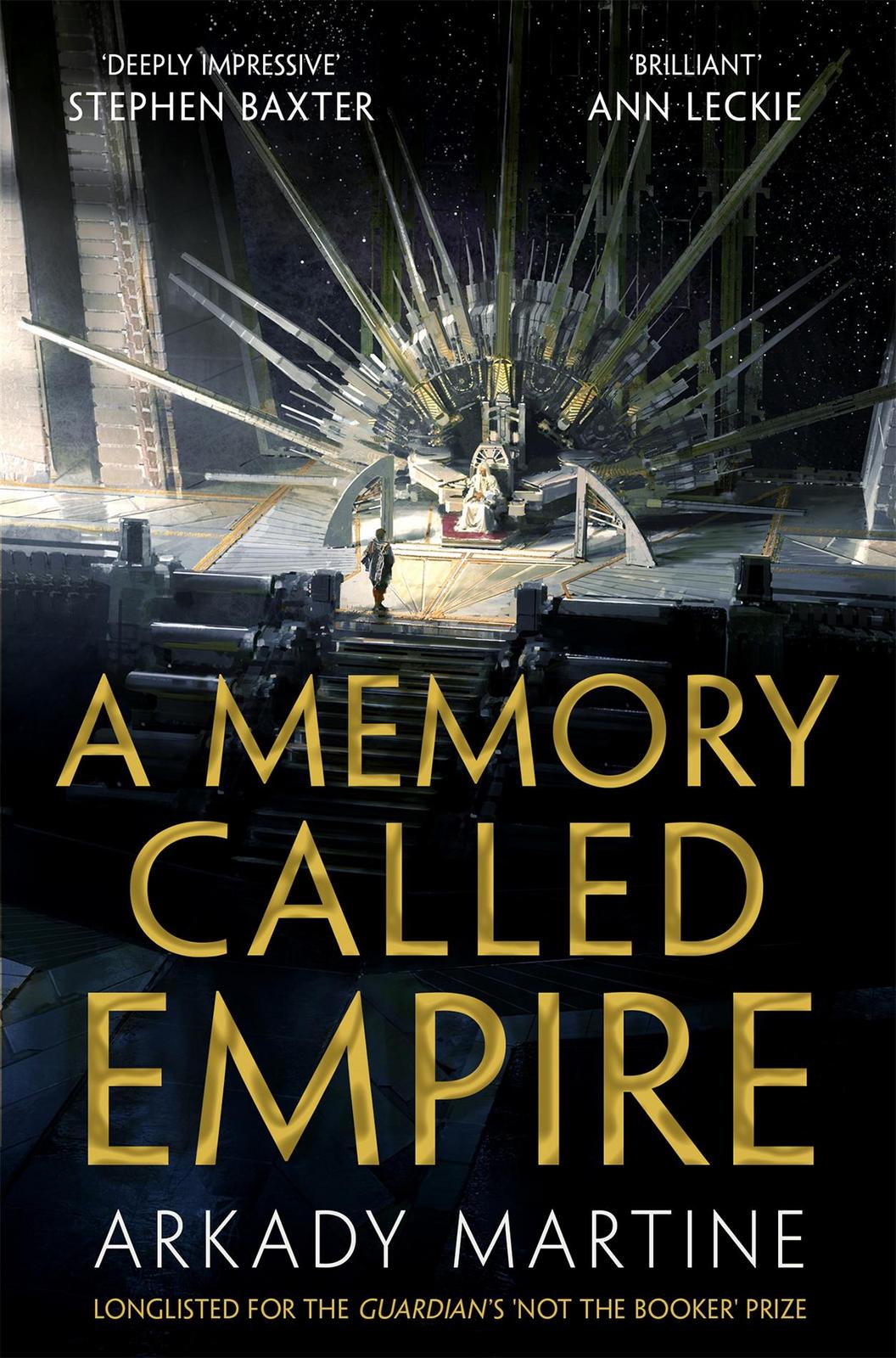
A Memory Called Empire is a 2019 science fiction novel, the debut novel by Arkady Martine. It follows Mahit Dzmare, the ambassador from Lsel Station to the Teixcalaanli Empire, as she investigates the death of her predecessor and the instabilities that underpin that society. The book won the 2020 Hugo Award for Best Novel.
You know how there is hard and soft science fiction? This is hard SF - the science being linguistics. The story is set in the far of future of the human race. Martine describes two different cultures beautifully. The world building is complex but not overly obsessed with extraneous details. The writing is phenomenal. Anyway, as you can probably tell, this is a recommendation from my side.
… wirklich schön anzusehen. Die Unterschiede auch in der Betrachtung der Welt, zwischen denen, die auf einer Weltraumstation aufgewachsen sind und denen, die auf DEM Planeten aufwuchsen. Gute Charakterisierungen, tolles Namenssystem, das mir das Merken von Namen sehr erleichtert. Alle auf dem Planeten heißen $Zahl $Substantiv also bspw „Neunzehn Breitaxt“, „Sechs Vektor“, „Drei Seegras“. Die Zahlen haben manchmal auch Verbindungen zum Charakter oder Job der jeweiligen Personen — so viel einfacher zu merken für mich als irgendwelche random Fantasynamen wie „Ft‘anr Lobdart“ oder sowas. Ich mochte auch die Poesie-Obsession der Planetenbewohnenden, die ihre ganze Kultur formt. Hier hatte ich allerdings desöfteren das Gefühl, dass die Übersetzung ihr nicht gerecht wurde. Auch wunderte es mich sehr, dass die Menschen in dem Buch alle Männer oder Frauen waren und sehr sehr viel generisches Maskulinum genutzt wurde. Daher werde ich den 2. Band auf Englisch lesen zum Vergleich. An sich ist das 1. …
… wirklich schön anzusehen. Die Unterschiede auch in der Betrachtung der Welt, zwischen denen, die auf einer Weltraumstation aufgewachsen sind und denen, die auf DEM Planeten aufwuchsen.
Gute Charakterisierungen, tolles Namenssystem, das mir das Merken von Namen sehr erleichtert. Alle auf dem Planeten heißen $Zahl $Substantiv also bspw „Neunzehn Breitaxt“, „Sechs Vektor“, „Drei Seegras“. Die Zahlen haben manchmal auch Verbindungen zum Charakter oder Job der jeweiligen Personen — so viel einfacher zu merken für mich als irgendwelche random Fantasynamen wie „Ft‘anr Lobdart“ oder sowas.
Ich mochte auch die Poesie-Obsession der Planetenbewohnenden, die ihre ganze Kultur formt. Hier hatte ich allerdings desöfteren das Gefühl, dass die Übersetzung ihr nicht gerecht wurde.
Auch wunderte es mich sehr, dass die Menschen in dem Buch alle Männer oder Frauen waren und sehr sehr viel generisches Maskulinum genutzt wurde.
Daher werde ich den 2. Band auf Englisch lesen zum Vergleich.
An sich ist das 1. Buch aber abgeschlossen und kann alleinstehend gelesen werden.
Was ein bisschen kurz kam, als seiendes Thema nur angeschnitten aber nicht ganz ausgespielt worden: Der Charakter der Stadt. Diese ist AI gesteuert und wird von Ministerien beeinflusst, scheint aber auch das Potential zu haben, rogue zu gehen. Mal sehen ob das im Band zwei anklingt.
Kurzum: Echt spannend, manchmal n bisschen langatmig aber überlebbar und richtig gutes Worldbuilding. Zudem ein paar „Queers“, wobei Heterosexualität nicht die Norm zu sein scheint und daher als Beschreibung vermutlich L/G/B besser passen würde.
On of the best sci-fi novels I've read in some time. Accomplishes the stellar feat of making a story which takes part almost entirely within a single city feel like it has galaxy spanning consequences. Reads as much like medieval court intrigue as it does full on space opera, and is all the better for it.
The last big space opera I read was Saga of the Seven Suns, and while that is a huge story full of fantastic imagination, I enjoyed the writing style of this novel so much more.
Can't wait to read the followup, and hopefully many more to come. Bravo.
The slow-burning love-child of House of Cards and The Expanse
stars
If I'm honest I first picked up this book because of the image on the cover but once I picked up the book I remained interested and the aesthetic remained pretty cool throughout and gave me vibes from the "Coup" and "The Resistance" board games.
The book really focuses in a lot on the political manoeuvrers of the central character Mahit and her allies (and enemies). There's a fair amount of political theatre and description of Mahit's internal monologue which reminded me of House of Cards. The world building meant that the plot does take a little while to really get going but once it does get going, there's a fair amount to be excited about. The last few chapters were pretty gripping and more reminiscent of something like The Expanse.
There is a lot of description of the culture and language used in the Teixcalaanli Empire which …
If I'm honest I first picked up this book because of the image on the cover but once I picked up the book I remained interested and the aesthetic remained pretty cool throughout and gave me vibes from the "Coup" and "The Resistance" board games.
The book really focuses in a lot on the political manoeuvrers of the central character Mahit and her allies (and enemies). There's a fair amount of political theatre and description of Mahit's internal monologue which reminded me of House of Cards. The world building meant that the plot does take a little while to really get going but once it does get going, there's a fair amount to be excited about. The last few chapters were pretty gripping and more reminiscent of something like The Expanse.
There is a lot of description of the culture and language used in the Teixcalaanli Empire which for me, really teetered on the precipice between detailed world-building and self-absorbed. I'm not really in to poetry - which is a huge part of Teixcalaanli culture so maybe that explains why I didn't really get on board with certain aspects of the world building but the descriptions of the technology, city, space vessels etc were well done.
Overall a solid, captivating sci-fi read if you can get on board with some of the slower descriptive parts of the book.