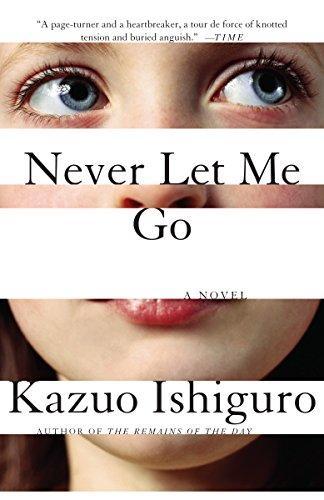

Never Let Me Go

288 Seiten

Sprache: English

Erschienen am 5. April 2005

ISBN:
978-1-4000-4339-2
ISBN kopiert!

Auf OpenLibrary ansehen

Auf Inventaire anzeigen

Never Let Me Go is a 2005 dystopian science fiction novel by British author Kazuo Ishiguro. It was shortlisted for the 2005 Booker Prize (an award Ishiguro had previously won in 1989 for The Remains of the Day), for the 2006 Arthur C. Clarke Award and for the 2005 National Book Critics Circle Award. Time magazine named it the best novel of 2005 and included the novel in its "100 Best English-language novels published since 1923—the beginning of TIME". It also received an ALA Alex Award in 2006. A film adaptation directed by Mark Romanek was released in 2010; a Japanese television drama aired in 2016.

6 Auflagen

Another Novel That Fails to Live Up to the Hype

There are many glimmers of brilliance in this novel. The philosophical themes are prominent but obvious and lacking the depth needed to make an emotional impact. The characters are nuanced enough to tell them apart and give them personalities with which to fall in step beside, but I never once cared what happened to Kathy or Tommy or Ruth. The sci-fi elements are subdued, falling behind the themes of destiny and fulfillment. The prose is serviceable but nothing worth praising. Much like Klara and the Sun, I neither understand the hype nor believe it offers anything profound to speculative fiction as a whole. While not a terrible book, I stopped reading around the 50% mark.


what's happening at the edges

Keine Bewertung

In a recent review of The Remains of the Days, I said that Ishiguro's characters "revel in tedium," and this happens again in Never Let Me Go. This time, that tedium is their attempt to make sense of their lives. It's either unthinkable or too difficult for these characters to accept that they are just disposable, that they have no interiority. The book is evidence that they do in fact have that interiority, but the ending makes clear that there's a whole set of cultural machinery set up to treat them as resources rather than people.

In that review of The Remains of the Day, I said the book "is deep in the weeds of something that seems ridiculous while all of these other more important things are happening around the edges." I'm realizing that this is Ishiguro's modus operandi. He's not ignoring the important historical events - he's …

A Memory

Inhaltswarnung Spoiler Alert.

avatar for Paranoid-Fish

bewertet es mit