
ilk@bookrastinating.com hat Too Like the Lightning von Ada Palmer besprochen (Terra Ignota -- Book 1)
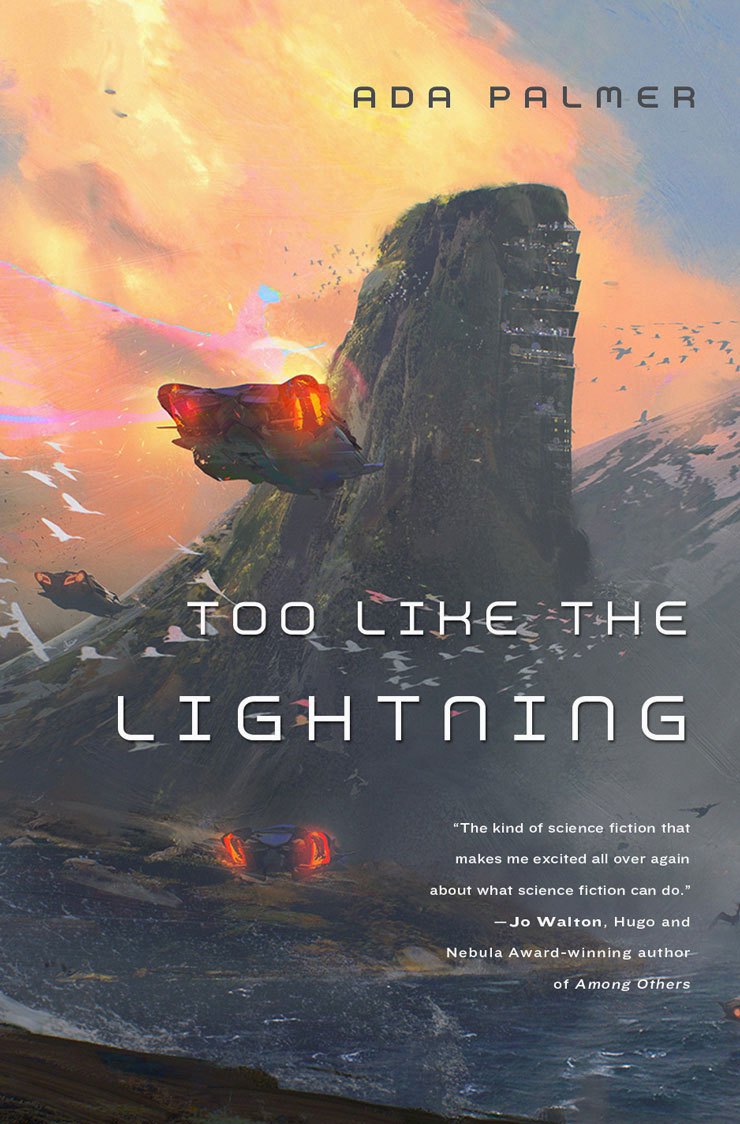
Too Like the Lightning
stars
This is a temporary DNF, and one of my big disappointments of the year. I read to approx. p220, giving up during an extended (and frankly inane) overstuffed dialog sequence.
I like the author. Palmer is intelligent, and passionate about her chosen subjects. I share a stack of the same interests, particularly censorship (she has a couple of great lectures on YouTube about the subject, explaining what censorship regimes really do, how they work, how universally slipshod they are, etc.)
I also like the book's key ideas. My social milieu DOES matter more to me than the country on my birth certificate, and that SHOULD count for something. But I couldn't grok her writing style. It's baroque. Too wordy, too 'mannered'. The framing device she employs is original (a history of events, about which extraneous details are included, like editorial decisions and commentary on people) but I can't …
This is a temporary DNF, and one of my big disappointments of the year. I read to approx. p220, giving up during an extended (and frankly inane) overstuffed dialog sequence.
I like the author. Palmer is intelligent, and passionate about her chosen subjects. I share a stack of the same interests, particularly censorship (she has a couple of great lectures on YouTube about the subject, explaining what censorship regimes really do, how they work, how universally slipshod they are, etc.)
I also like the book's key ideas. My social milieu DOES matter more to me than the country on my birth certificate, and that SHOULD count for something. But I couldn't grok her writing style. It's baroque. Too wordy, too 'mannered'. The framing device she employs is original (a history of events, about which extraneous details are included, like editorial decisions and commentary on people) but I can't help but feel it got in the way of the story. Pacing is weird: I read practically half the book and it felt like only a couple of things had happened.
The extensive cast doesn't help things either. Then add in alternate names for certain characters, used in the same paragraph. Then add unconvential punctuation. The book has an obsession with names and titles.
I might pick up the book and the series again later on and discover a favorite. But I know it didn't hold me on the maiden read. A pity.