
danwchan hat The Ministry for the Future von Kim Stanley Robinson besprochen
Interesting ideas, not a fan of the characterizations
3 Sterne
A bit rosy view of the world.
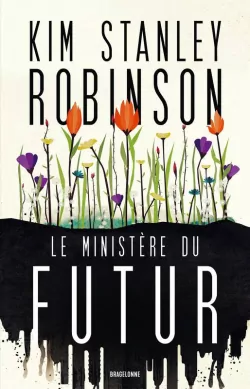
Taschenbuch, 552 Seiten
Sprache: French
Am 24. Oktober 2023 von Bragelonne veröffentlicht.
L'auteur de science-fiction légendaire Kim Stanley Robinson nous propose une vision du changement climatique pareille à nulle autre.
Établi en 2025, l'objectif de la nouvelle organisation était simple : plaider pour les générations à venir du monde et protéger toutes les créatures vivantes, présentes et futures. Il fut vite surnommé « le Ministère du Futur ».
Raconté entièrement sous forme des témoignages directs de ses personnages, Le Ministère du Futur est un chef-d'oeuvre de l'imaginaire, l'histoire de la façon dont le changement climatique nous affectera tous dans les décennies à venir.
Le décor n'est pas un monde postapocalyptique et désolé, mais un avenir qui nous fonce dessus... et où il nous reste une petite chance de surmonter les défis extraordinaires auxquels nous devons faire face.
A bit rosy view of the world.
I thought I would enjoy this book a lot more, and it ended up being a bit of a slog towards the end. A lot of the writing is very "stream of consciousness", and there's not much of a plot to speak of.
In terms of finding ideas for addressing climate change, there's too much focus on blockchain and geoengineering. Not really solarpunk.
So his answers for both, basically: maximalism. The point he's sort of making is that making the planet safely inhabitable is going to take every tactic and every ideology not necessarily working together but working on some piece of the thing. No one actor gets to be the hero (though I do enjoy that KSR's favorite kind of protagonist remains the middle-aged competent lady technocrat–guy's got a type) and while he's sort of indicating that capitalism as we know it has to die, he's not saying that happens through inevitable worker uprising. Some of it's coercion of central banks and some of it's straight-up guerrilla terrorism. Geoengineering happens at varying scales for better and for worse. Massive economic collapses occur. Millions die. And the point I think from KSR is that's the outcome in his most optimistic take. In general with KSR I don't know if I ever fully agree, …
So his answers for both, basically: maximalism. The point he's sort of making is that making the planet safely inhabitable is going to take every tactic and every ideology not necessarily working together but working on some piece of the thing. No one actor gets to be the hero (though I do enjoy that KSR's favorite kind of protagonist remains the middle-aged competent lady technocrat–guy's got a type) and while he's sort of indicating that capitalism as we know it has to die, he's not saying that happens through inevitable worker uprising. Some of it's coercion of central banks and some of it's straight-up guerrilla terrorism. Geoengineering happens at varying scales for better and for worse. Massive economic collapses occur. Millions die. And the point I think from KSR is that's the outcome in his most optimistic take. In general with KSR I don't know if I ever fully agree, but I always feel fully engaged.
This is also probably the most not-novel-y of his novels in that there's a couple of recurring characters running through the book but a ton of it's just first-person unnamed narration of events happening around the world. Someone describing a drought, a refugee describing a camp, a miner describing the nationalization of his mine. One very weird and fun chapter from the point of view of actual carbon.