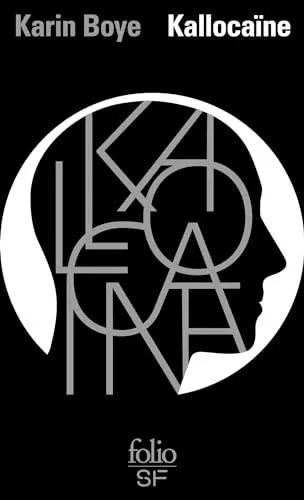
Kallocain is a 1940 dystopian novel by Swedish novelist Karin Boye that envisions a future of drab terror. Seen through the eyes of the idealistic scientist Leo Kall, Kallocain is a depiction of a totalitarian world state. An important aspect of the novel is the relationships and connections between the various characters, such as the marriage of the main character and his wife, Linda Kall, and the feelings of jealousy and suspicion that may arise in a society with heavy surveillance and legal uncertainty. Kallocain was well received by contemporary Swedish critics on its publication in 1940. It has since been published in numerous Swedish editions and has been translated into more than 25 languages; English-language translations include those by Gustaf Lannestock (2002, University of Wisconsin Press) and David McDuff (2019, Penguin Classics). It was adapted into a television miniseries in 1981 by Hans Abramson. In 2016, the novel was …
Kallocain is a 1940 dystopian novel by Swedish novelist Karin Boye that envisions a future of drab terror. Seen through the eyes of the idealistic scientist Leo Kall, Kallocain is a depiction of a totalitarian world state. An important aspect of the novel is the relationships and connections between the various characters, such as the marriage of the main character and his wife, Linda Kall, and the feelings of jealousy and suspicion that may arise in a society with heavy surveillance and legal uncertainty.
Kallocain was well received by contemporary Swedish critics on its publication in 1940. It has since been published in numerous Swedish editions and has been translated into more than 25 languages; English-language translations include those by Gustaf Lannestock (2002, University of Wisconsin Press) and David McDuff (2019, Penguin Classics). It was adapted into a television miniseries in 1981 by Hans Abramson.
In 2016, the novel was nominated for the Retro-Hugo award for the best science fiction novel of 1941.
Damit habe ich drei der vier klassischen Dystopie-Romane um die Kriegszeit gelesen. Ich finde es deutlich besser gealtert als Huxleys „Schöne neue Welt“. Die Wandlung ist hier auch noch etwas subtiler als bei Huxley und Orwell.\r\n\r\nPS: Was für eine krasse Person Boye war.